

Reduced vision in one eye.
Amblyopia Treatment
We utilize the latest computer programs and virtual reality (VR) technologies to stimulate the eye and enhance visual efficiency with high precision. Advanced treatment plans help develop visual focus and binocular coordination in a safe, modern way for children.
Dr. Ossama Abdel Hakim
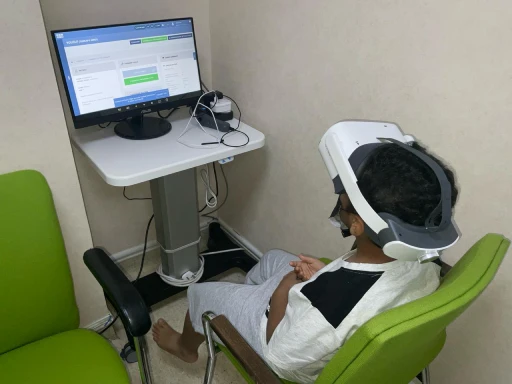
What is lazy eye (amblyopia)?
Amblyopia, or lazy eye, is a condition in which vision does not develop normally in one eye during childhood, leading to reduced visual acuity in that eye. It typically occurs when the brain ignores images from the weaker eye and relies more heavily on the stronger one.Amblyopia is one of the most common childhood vision problems, affecting approximately 2–3% of children. Early intervention is essential for the best outcomes, as the brain is most adaptable and responsive during early childhood.
Available treatment options.
Medical glasses (prescription spectacles).
Correction of refractive errors such as myopia, hyperopia, or astigmatism with customized glasses.
Occlusion therapy (patching).
Patching the healthy eye for specific periods to encourage use of the weaker eye and strengthen its vision.
Eye drops (atropine penalization).
Use of atropine drops to temporarily blur vision in the stronger eye, thereby stimulating the weaker eye.
Treatment of amblyopia using virtual reality (VR) technology.
Common symptoms
Clearer vision… through an enjoyable method for your child.
Virtual reality technology helps treat amblyopia through interactive games and exercises designed to stimulate the weaker eye and improve communication between the lazy eye and the brain in an enjoyable and safe manner.
Dr. Osama Abdel Hakim
Consultant of Ophthalmology and Eye Surgery
Over 25 years of experience
Consultant of Ophthalmology and Eye Surgery
Over 25 years of experience
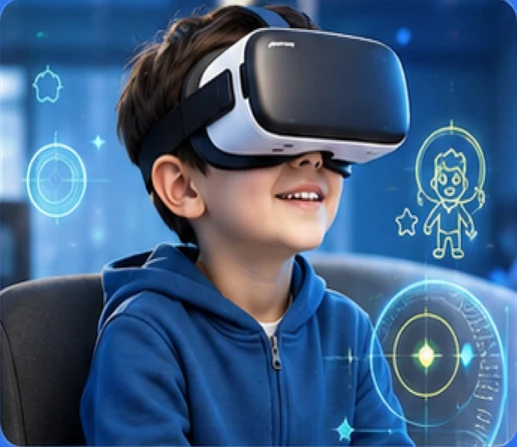
How does VR‑based therapy work?
Stimulation of the amblyopic eye.
Different images or games are presented to each eye separately, which helps stimulate the weaker eye and gradually improve its function.
An enjoyable experience for children.
Treatment is delivered through interactive games and activities that encourage better cooperation from the child during therapy sessions.
Improved coordination between the two eyes.
The goal is not only to strengthen the visual acuity of the amblyopic eye but also to improve binocular coordination and restore better two‑eyed vision.
Suitable cases for treatment.
Amblyopia resulting from a significant difference in prescription strength between the two eyes (anisometropic amblyopia).
Amblyopia associated with certain types of strabismus.
Children who do not tolerate patching therapy well.
Cases that require supplementary treatment alongside glasses or patching of the healthy eye.
Benefits of VR‑based therapy.
Important advice for parents.
What can we expect from the sessions?
Comprehensive assessment before starting therapy.
VR program tailored to the child's age and clinical condition.
Regular sessions as per the prescribed treatment plan.
Monitoring visual acuity and amblyopia improvement.