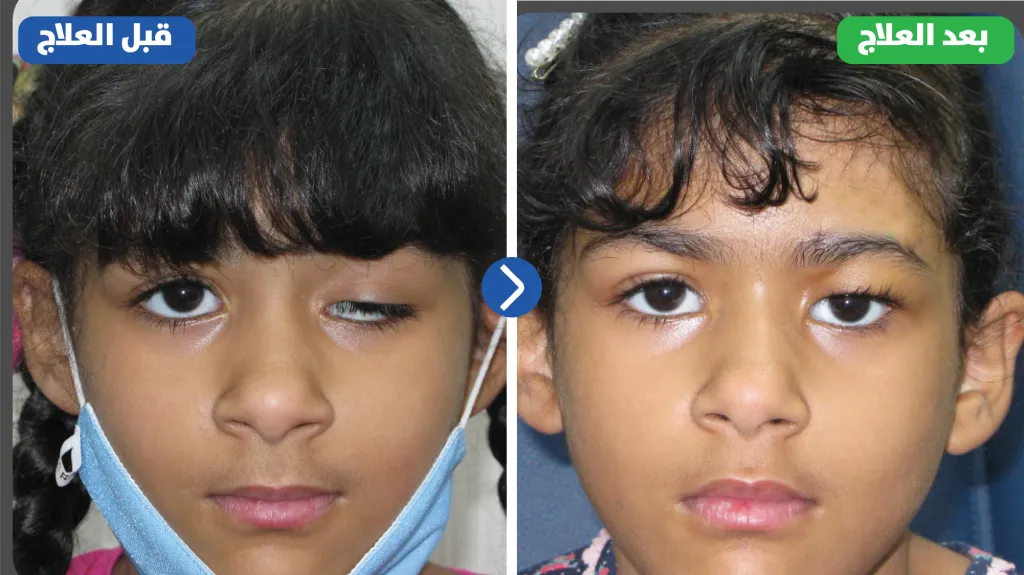
Ptosis Repair

Treatment of eyelid drooping that may affect vision using precise surgical techniques.

Dr. Ossama Abdel Hakim

Advanced surgical correction of eyelid and periorbital muscle laxity to restore natural appearance and proper function.

Causes of ptosis and eyelid laxity.

Weakness of the levator palpebrae muscle.

Aging.

Congenital problems present from birth.

Weakness of the nerves supplying the eye.

Symptoms and associated problems.

Drooping of the eyelid with partial coverage of the eye.

A tired or fatigued appearance.

Difficulty with vision.

Strain of the facial and neck muscles.

Surgical repair techniques.

Muscle shortening.

For moderate cases.

Internal eyelid incision.

Suitable for age-related changes.

Muscle suspension.

For severe cases.

Frontalis suspension.

For congenital or neurogenic cases.

Treatment outcomes.

Improvement in the natural appearance of the eye.

Improvement in vision and visual quality.

Reduction of strain and fatigue.

Precise surgery with advanced diagnostic evaluation.

Potential complications.

Rare infection.

A minimal possibility of local infection that can be managed with appropriate treatment.

Difficulty in closing the eye.

Temporary difficulty in fully closing the eye, which decreases with time.

Mild scarring.

Very mild scarring at the surgical incision site, usually unnoticeable.

Slight asymmetry.

Minor difference in eyelid height or eye shape, which may require slight adjustment.

Swelling and bruising.

Swelling and bruising around the eye that gradually resolve within days to two weeks.

Dryness or irritation of the eye.

Temporary dryness or tearing that improves with eye drops and lubricants.

Other rare complications.

Such as suture allergy or hypersensitivity reaction, occurring in very rare cases.

Bleeding or blood collection (hematoma).

Minor subcutaneous blood collection in rare cases, which resolves gradually.

Excessive lowering or elevation of the eyelid.

Excessive lowering or elevation of the eyelid that may require minor adjustment.

Numbness or reduced sensation.

Temporary numbness or reduced sensation in the eyelid or eyebrow that improves with time.

Visual problems.

Temporary blurred vision due to swelling or dryness, which gradually improves.

Recurrence of eyelid ptosis.

Mild recurrence of ptosis after improvement, which may require adjustment or revision.

In the next video, Dr. Osama Abdel Hakim explains the causes of eyelid ptosis and the appropriate treatment options for each case.

احجز كشفك الآن

تابعنا على منصات التواصل